
Marseille as raw material
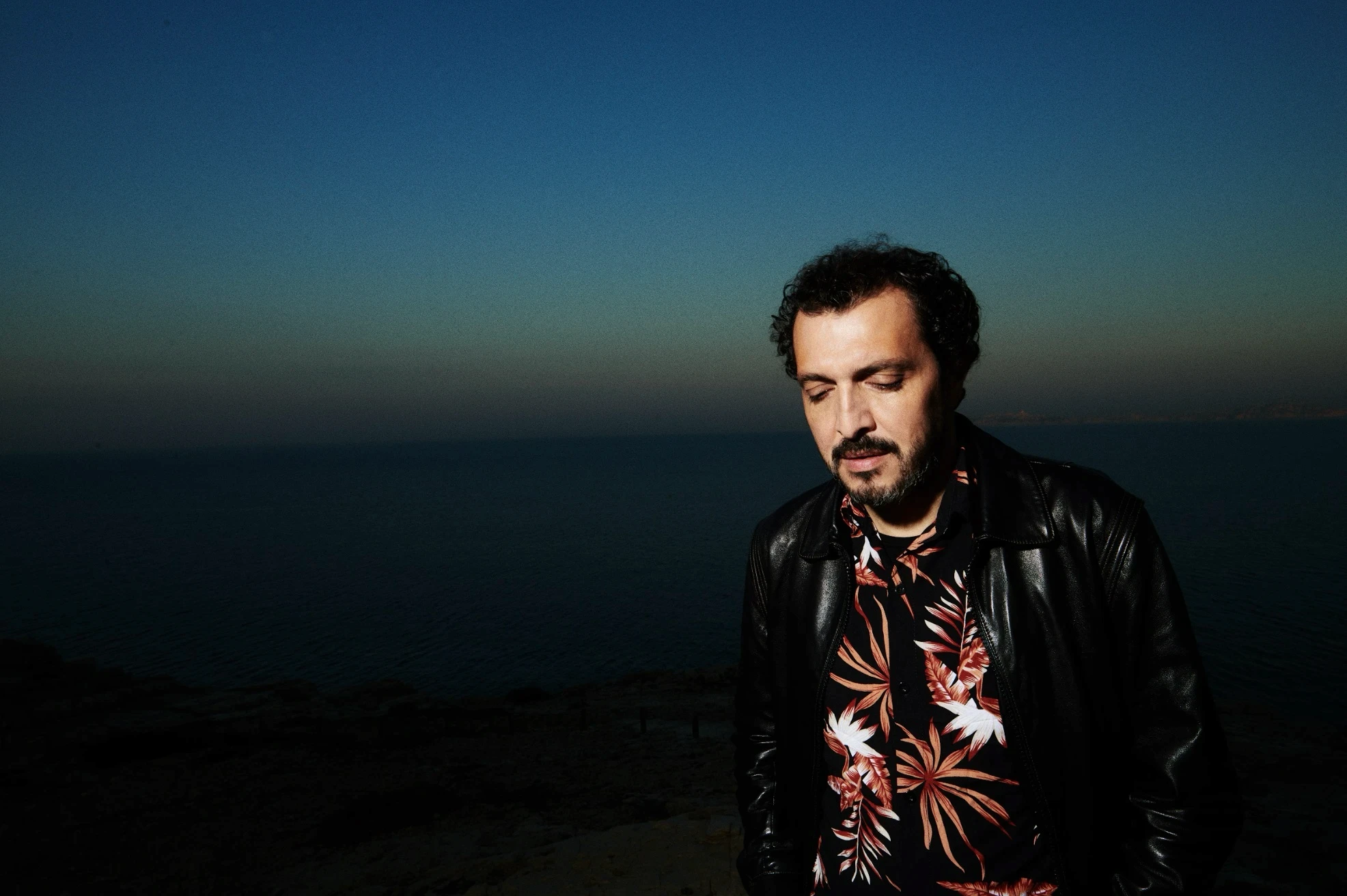
Kid Francescoli is, first and foremost, a Marseille project. And not just by address. Hocine was born in Paris and spent part of his childhood in Corsica, but his family settled in Marseille, and he's always considered himself a Marseillan, as he told Made in Marseille. The city gave him two formative things: the Mediterranean Sea, and Olympique de Marseille.
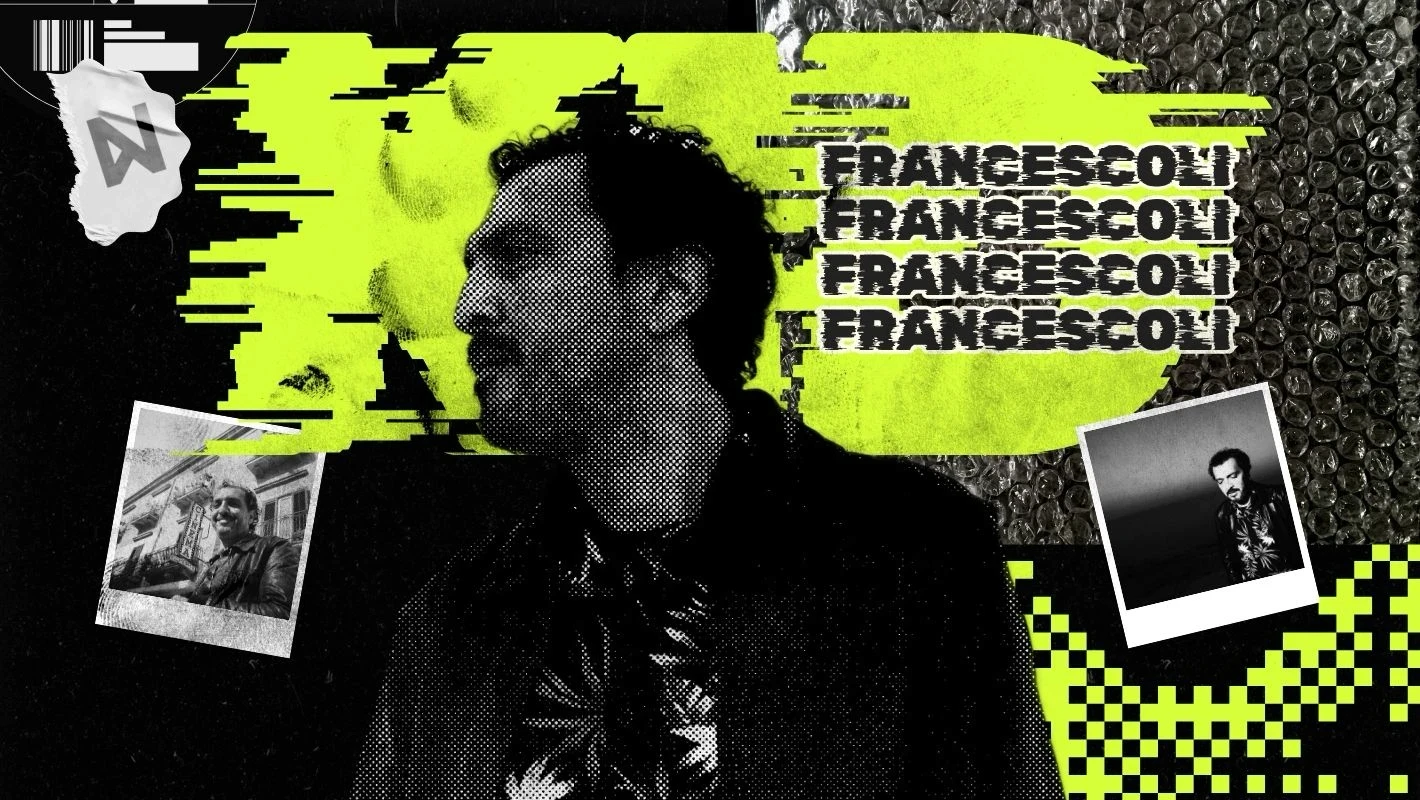
The second one matters more than you'd expect for an electronic producer, because it gave him his name. Enzo Francescoli was a Uruguayan midfielder who played a season for OM at the turn of the 1990s — a player so elegant that Zinédine Zidane named his own son after him. In an interview with the French magazine Urbania, Hocine recalled being fascinated as a kid by Francescoli's class and grace, which made his game feel almost like art. When he traded cleats for instruments, he took the surname as his stage name and added "Kid" — the kid who used to play imaginary concerts in his bedroom in Marseille.
It's a small detail, but it says a lot about how Hocine thinks. He didn't pick a name based on genre, trend, or some English-sounding abbreviation. He picked an aesthetic ideal — movement that's functional and beautiful at once. And for twenty years, that's exactly what he's carried into the music: songs that function as pop but move with a lightness pop usually doesn't have.
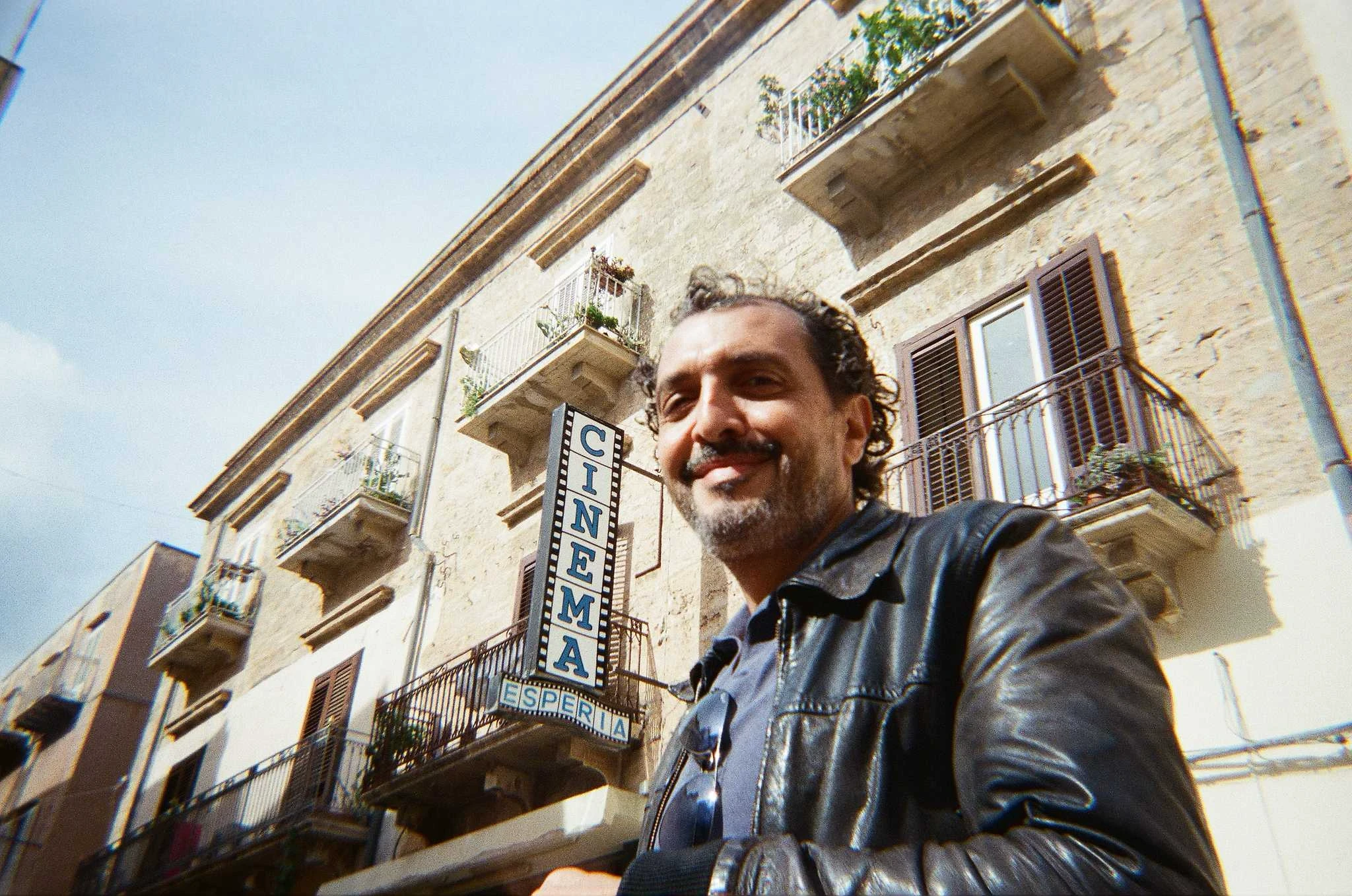
The project started in the early 2000s, and the self-titled debut album came out in 2006 on small labels. Years of classic club-circuit grinding followed — small venues, opening for friendly bands, no fast breakthrough. An important base became the Marseille scene around the Friche la Belle de Mai cultural center, which later grew into a shared studio on Rue Paradis, where Kid Francescoli worked alongside projects like French 79, Nasser, and Oh! Tiger Mountain. Marseille wasn't a music capital back then — it was a workshop. And that workshop mentality — creating side by side, lending each other hands, remixing one another — has stuck with Hocine ever since.
With Julia: a love story as a production method
The turning point came in 2009, when Hocine met the New York singer Julia Minkin. A working relationship became a romantic one, and the relationship became an album — With Julia (2014), a record written between Marseille and New York where the long-distance relationship is audible, literally: two voices, two continents, electronics as the only medium holding it together. This era also produced Blow Up, the track that made Kid Francescoli a name known far beyond France.
What happened next is more interesting, though. The relationship ended; the collaboration didn't. Play Me Again (2017) came together as a purely musical partnership between two people who used to live together — and in an interview with Le Mensuel, Hocine said it never even crossed his mind to make the record without her, because meeting Julia had been a creative shock that defined the project. That's a rare creative move, by the way: most duos fall apart professionally too once the relationship ends. Kid Francescoli mined new tension out of the situation instead — and used it to write his most successful album.
Anatomy of a viral hit: the voice memo behind 200 million streams
Play Me Again also contains the track that would change everything a few years later. Moon (And It Went Like) is almost cocky in its production simplicity: a repetitive piano motif, slowly layered on top of itself, and a melodic line that Julia Minkin sang — or rather, hummed — into an ordinary voice memo on her phone. No vocal booth, no Auto-Tune, no lyric-based hook. Just a voice memo that Hocine kept in the final version, because it worked better than anything recorded "properly."
In 2020, TikTok and Instagram Reels found the track — and it became exactly what the sync industry calls the ideal bed track: emotional, instrumental, with no lyrics competing with whatever's on screen. Besides the half a million creators who used it — including Jennifer Lopez, Lizzo, and The Rock — the first season of Netflix's Emily in Paris featured it too, and campaigns for Apple, Chanel, Xbox, and Gap followed one by one. The result: three gold singles, one diamond certification, and around three million monthly listeners across streaming platforms.
Now for the part that matters more than the numbers, for anyone who makes content. Moon wasn't made for TikTok — it came out three years before the platform even found it. It wasn't a trend hack, it wasn't a sound engineered for a fifteen-second format. It was a finished, honestly built song whose structure — a loop that builds and takes its time — happened to be perfectly compatible with the logic of short video. The virality found the song by itself, because it was good. That's an inconvenient truth for anyone trying to engineer a viral moment: the best strategy for the algorithm is still craft the algorithm doesn't actually need.
On top of that, Hocine didn't act like a one-hit wonder. He didn't turn Moon into a template and start churning out clones of his own hit. Instead, he kept making albums that sound like him — which, from a branding perspective, is exactly the moment a viral sound turns into a real, authored catalog.
How he works: the loop as the basic building block
When Hocine describes his process in interviews, he keeps coming back to one principle. Almost everything starts with an instrumental loop he builds alone in the studio, and only then does he invite a voice in — as he explained back in the Julia Minkin era, in an interview for Les Connards en Ray-Ban, where he also admitted he sometimes reverses the recipe, starting from the singer's melody and turning it into a keyboard motif instead. A loop-first approach is nothing unusual in electronic music, but Kid Francescoli treats it more like a minimalist composer than a club producer: for him, the loop isn't a bed for the drop — it's the main character of the song, mutating in millimeter increments over time.
The second pillar of his method is working with guest voices. Kid Francescoli is formally a solo project, but functionally it runs as an open platform — after the Julia Minkin era, singer and multi-instrumentalist Andréa Durand became his key collaborator, touring with him alongside drummer Raphaël Léger. For Hocine, the voice is just another instrument in the arrangement, not a frontperson everything else bends around. That's why his songs work so well without words — and why brands and filmmakers love borrowing them.
The third thing that makes him an interesting case study is the range of work outside his own albums. In 2022, he composed his first feature film score, for Azuro, and that same year, as part of the FRAGMENTS project, he took on a rework of Erik Satie's Gnossienne No. 1 — which makes sense, since Satie is basically the great-grandfather of his whole aesthetic: repetition, simplicity, melancholy without the pathos. Hocine, in short, isn't building a career on singles — he's building a sonic identity that can be licensed, adapted, and developed across formats. In an industry where streams pay out in fractions of a cent, that's also, by the way, a very sensible business model.
How it sounds: sunset as a sonic identity
Now for the creative part. Why does Kid Francescoli's music feel the way it does?
The base feeling is cinematic. His songs don't behave like songs telling you something — they behave like scenes you step into: a scooter ride along the Marseille corniche, the last hour of light on a beach, the moment a party hasn't ended yet but you already know it will. French media place his work in the French touch lineage — a tradition running from Air and Sébastien Tellier to his studio neighbor French 79 — but Hocine brings a specifically Mediterranean warmth to it. Where Parisian electronic music is cold and nocturnal, his is sun-drenched and late-afternoon. If Air were the soundtrack to a city at three in the morning, Kid Francescoli is the soundtrack to the sea at seven in the evening.
The second layer is nostalgia that never tips into sadness. His typical track is built on a major, almost naive melody, running over a melancholic harmonic undertow — and it's exactly that tension that produces the "beautiful, but something's ending" feeling that hundreds of thousands of people intuitively picked as background music for their nostalgia edits. That's not luck or coincidence. It's precisely tuned emotional ambiguity — the same principle the best advertising music runs on, except here it started as an honest authorial statement, and brands only picked it apart afterward.
And the third layer is patience. Hocine lets songs breathe; his builds take minutes, not bars. At a time when pop production gets optimized for the first three seconds, his refusal to rush is almost provocative — and, paradoxically, it's exactly what makes his music such good material for repeat listening. A loop that doesn't attack you doesn't wear you out.
Sunset Blue, and the stage as a second home
Sunset Blue (2023), mastered by French electronic music veteran Alex Gopher, is the project's most personal chapter so far. Hocine returned to his Mediterranean roots on it, and singles like You Are Everywhere, 1986, and Run, Run sound like a distillation of everything he's picked up over twenty years: pop with a memory, electronics with a landscape in the background. The record sent him on a tour of more than a hundred shows across five continents — and it's live that something the streaming numbers can't tell you becomes obvious.
Kid Francescoli is a surprisingly physical live experience. Club show reviews from Sydney to Seattle keep landing on the same image: what sounds like eyes-closed music on record turns, on stage — with Andréa Durand at the mic and Raphaël Léger on live drums — into a dance set that keeps club energy without sacrificing the dreaminess. Audiences who showed up for one TikTok sound leave with the whole catalog. Which, by the way, is the best possible proof that a real artist is behind the viral moment: fifteen seconds gets you in the door, ninety minutes keeps you there.

A Kind Wave: a new chapter with Phoenix's keyboardist
Which brings us to this year. His seventh studio album, A Kind Wave (All Night Long / Believe France), comes out on October 9, 2026 — and by all accounts, it's the most open record Hocine has ever made. Production involved Robin Coudert, aka Rob, Phoenix's go-to producer and touring keyboardist — someone who knows about as much about globally ambitious French pop as it's possible to know. Andréa Durand sings on five tracks, including the single Don't Get On The Plane, and based on what's out so far, the whole album stretches into soul, R&B, and dancier territory: the single City of Gold, featuring a Nigerian singer named Demigod whom Hocine discovered on Instagram, mixes his signature loops with an African pulse, while Do Meu Coração flirts with Brazilian softness.
Hocine himself summed it up for EDM Nomad with a line that could easily hang over the door of his studio: "What inspires me most about music is music itself, and how it affects people." No manifesto, no big conceptual statement — just a craftsman who, twenty years in, still considers a song's effect on the listener reason enough to make it.
October 30 at MeetFactory: why the timing works in his favor
The European tour for the new record kicks off on October 14 at London's Electric Brixton and, via Amsterdam, Berlin, and Barcelona, arrives at Prague's MeetFactory on Friday, October 30, 2026. Tickets are on sale through GoOut.
If you've never been to one of his shows, this is probably the ideal setup you'll ever get. First, the timing: Prague comes up three weeks after the album drops, so you'll hear A Kind Wave with the set freshly built around new material and the band still playing it with opening-night energy — but late enough that you'll have had time to actually live with the record. Second, the venue: MeetFactory, an industrial building squeezed between a rail line and the Strakonická thoroughfare that doubles as a gallery, residency studio, and club, is an almost dramaturgically perfect fit for this music. Hocine's aesthetic grew out of the former Friche la Belle de Mai tobacco factory and out of the sharp contrast between concrete and sea — a Smíchov factory with an art program is its closest Prague relative. And third, scale: an artist with 200 million streams whom you can still see in a club where you can watch fingers on the keys from the back row is an anomaly that won't necessarily last.
The takeaway
Kid Francescoli is a useful story even for people who have nothing to do with music. It shows that an authorial signature is worth more long-term than chasing trends — his viral moment came out of a record that wasn't planning for virality, and it grew into a career precisely because there was a consistent world behind it that people could go deeper into. It shows that constraint is a creative tool: a voice memo instead of a studio vocal, a loop instead of a big arrangement, one city as a lifelong subject. And it shows that patience isn't passivity — he spent twenty years building a sound that eventually found its own audience, because it was unmistakably his.
In October, you'll be able to check all of this with your own ears. When the first loop starts up at MeetFactory, you'll understand within a few bars why half the internet fell in love with it — and why we just spent over two thousand words on a Marseillan with a Uruguayan name.